Animal Control and Wildlife

The Town of Whitby Animal Services Officers enforce animal-related by-laws, receive complaints, handle barking dog issues and respond to wildlife concerns.

There are two main by-laws governing animals in Whitby:

Wildlife

Animal Services staff are trained to safely deal with issues related to wildlife in the Town of Whitby. Learn what you should do when you encounter sick or injured wildlife, nuisance animals, coyotes or bears.

The Durham Region Health Department is monitoring reports of dead birds for potential avian influenza.

If you see a sick or dead bird on municipal or private property, please report it directly to Animal Services by calling 905-655-0283. It is important to provide the location of the wild bird to help Animal Services staff investigate.

To keep yourself and your pets safe, please follow these guidelines:

  • Stay away from sick or dead birds and do not try to help or handle them.

  • Avoid contact between your pets and wild birds.

  • Do not put pet food outside, as it may attract birds to your property.

  • Keep your pets on a leash to prevent contact with sick or dead birds or their droppings.

  • Remove bird feeders from your property to prevent attracting wild birds that may be sick.

  • Feeding wild birds is not allowed on Municipal property.

Additional Resources: 

We are working closely with federal and provincial agencies to keep everyone informed about the avian influenza outbreak. We will continue to update our animal wildlife page with any new information.

If you have any questions or concerns, please contact Animal Services at 905-655-0283 or paw@whitby.ca.

If you encounter wildlife that is sick or injured, poses a threat to humans or domestic animals, or displays signs or symptoms of rabies, do not touch or handle the animal. Call 905.655.0283 x4 for around-the-clock emergency assistance.

Help keep wildlife wild and healthy. The Town encourages residents to avoid feeding wildlife such as ducks, geese, raccoons, squirrels or coyotes. Help reduce wildlife conflicts with people by not feeding wildlife near homes and parks. Human food is not healthy for wild animals!

While we do not provide trapping or relocation services for nuisance wildlife, our trained staff can offer solutions to help you wildlife-proof your home or business. Contact us at 905.655.0283 for support.

Whether it’s a baby bird, rabbit, raccoon or skunk, a baby animal’s best chance for survival is with its mother. Finding a baby animal doesn’t always mean they’re in trouble – many times, you won’t need to do anything at all.

But if the baby is injured or sick, please contact Animal Services by phone at 905.655.0283 or by emailing Animal Services.

Did you know that mother rabbits can have their babies in the grass or even in your garden?

From late March to early August Whitby Animal Services often sees an influx in calls from residents regarding baby bunnies. Baby bunnies are often found burrowed in nests among the grass. By frequently scanning your backyard for nests before cutting the grass or letting your dog outside you can help ensure the safety of these baby animals.

Nests can be seen as shallow depressions in the ground and are made up of dead grass, leaves and fur. If you find a rabbit nest the best thing to do is leave them be, the mother only comes to feed them 2-3 times a day and will only do so when people and predators aren’t around. If you have a dog, the best thing to do is block off the area before you let your dog out or keep your dog on a leash. Baby rabbits only need a few weeks before they are able to be on their own. If you notice that they are injured or think they may be sick please contact Animal Services by phone at 905.655.0283 or by emailing Animal Services.

Please check the following resources:

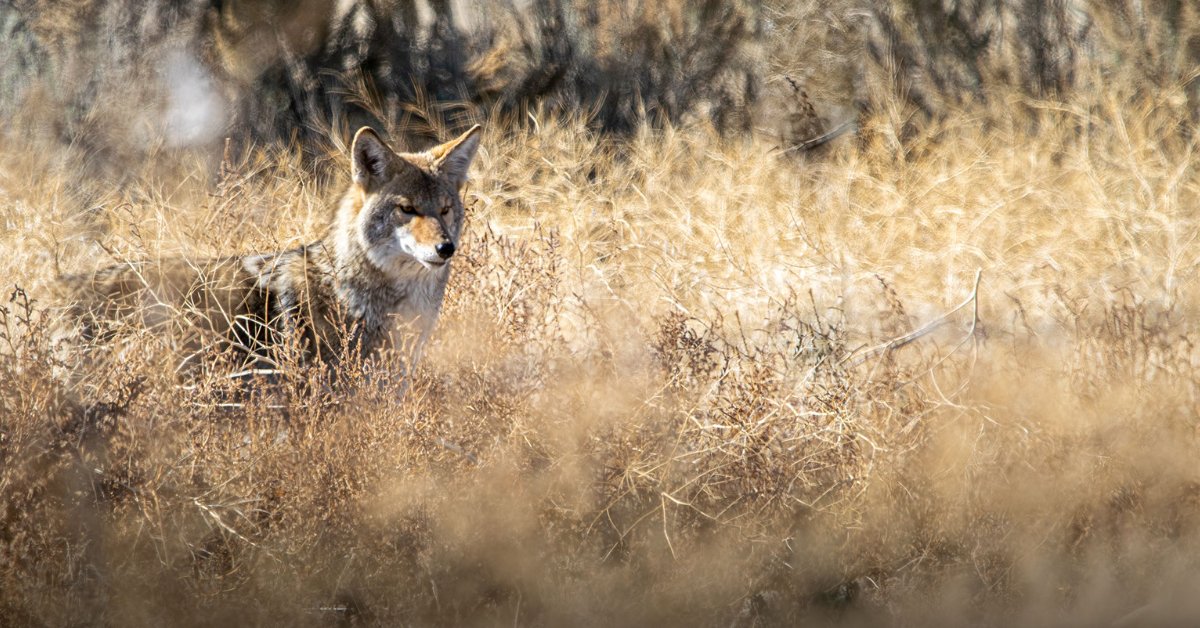
Coyote in field

Read the Whitby Coyote Coexistence & Response Strategy

Coyotes are an important part of our ecosystem and contribute to a healthy, necessary prey-predator balance. As our population grows, we encroach on the natural habitats of various wild creatures, prompting them to adapt to new surroundings and settle near us.

You can stay safe and help prevent conflict with them by:

  • Keeping your distance
  • Never feeding them
  • Keeping pets away from them
  • Making loud noises and waving arms if approached

Report a Sighting

You can report a sighting to Animal Services at 905-655-0283 or using the online reporting form.

Coyote Sightings Dashboard

Learn more about Whitby's latest coyote sightings using this dashboard.

Do Not Feed Coyotes

Feeding coyotes can cause them to lose their natural fear of people, making it more difficult for humans and wildlife to coexist safely. In many cases, reports of aggressive coyote behaviour are linked to intentional or unintentional feeding by people in the area. Habituated coyotes may become bolder and pose a greater risk to small pets and, in rare cases, children. Feeding coyotes is prohibited under the Town’s Public Nuisance By-law.

Community members can eliminate the food source by:

  • Securing your garbage
  • Keeping people and pet food indoors
  • Cleaning up fallen fruit and spilled bird seed

Frequently Asked Questions 

How can I prevent coyotes from visiting my yard?

  • Keep your property clean - trim back bushes and weeds, scoop your dog poop, and keep your barbecue area clean.
  • Secure your home and sheds - seal openings into and under buildings, decks, and porches.
  • Consider installing motion sensor lights.
  • Never allow a coyote to linger or bed down near your home or business. Coyotes that become comfortable around people can pose a safety concern.

How can I keep my pets safe?

Here is how you can be a good pet owner and keep your pets safe: 

  • Supervise pets when they are outdoors at all times.
  • Bring pets in at night.
  • Keep dogs on a leash no longer than 6 feet in length.
  • Retractable-type leashes are not recommended.

 What should I do if I encounter a coyote?

  • If you feel your safety is at immediate risk, call 9-1-1.
  • Stop and pick up small children and pets.
  • Back away slowly, keeping an eye on the animal. Never run from or turn your back on a coyote.
  • Be big, loud, and assertive! Yell, "Go away!"
  • Wave your arms above your head.
  • Use aversion techniques such as shaking car keys, snapping an air-filled garbage bag, popping an umbrella, or throwing an object near, but not at, the coyote.

How do I report coyote sightings?

Report coyote and wildlife sightings:

When are coyote sightings most common?

Coyote sightings are more frequent in the winter during mating periods (January - February), Spring during den selection/pup rearing (March - June) and Fall during the dispersal of pack members.

To learn more about living safely alongside coyotes, including how to prevent conflicts and protect your pets, family and property, visit the Ontario Ministry website:  Preventing & Managing Conflicts with Coyotes, Wolves & Foxes.

To help prevent conflict with coyotes, the Town does the following:

• Responds to reported coyote sightings. 
• Improves coyote sighting tracking and reporting systems to better understand the types of interactions occurring in the community. 
• Follows best practices from Municipal Coyote Response Management Plans to help prevent conflicts between people and coyotes. 
• Installs "Coyote Warning" signage in areas with multiple reported sightings. 
• Consults with other municipalities that have established coyote response strategies. 
• Works with the Ministry of Northern Development, Mines, Natural Resources and Forestry to obtain information on response best practices and request assistance when needed. 
• Consults with Coyote Watch Canada on response best practices. 
• Collaborates with Durham Regional Police Service to coordinate coyote response efforts.

Follow @TownofWhitby on Facebook for news and safety tips.

Resources

• Free Coyotes in the Urban Landscape online module
• Coyote Watch Canada information, including Frequently Asked Questions
• Ministry of Natural Resources

If you encounter a bear in your neighbourhood and are concerned about an imminent threat to public safety, call 911. In a non-emergency situation between April 1 and November 30, call the provincial Bear Wise reporting line. From December to March, contact the Ministry of Natural Resources and Forestry.

Appearance of Fox

Foxes have accustomed themselves to living in urban areas, so seeing them in the Town is fairly common.

Usually foxes live in grassy regions, ravines and will even make their den under sheds or hollowed out trees. Foxes, among other wildlife will take over other dens of smaller animals, so it is best to wildlife-proof your property at the first sight of any possible nesting areas that are forming. You will notice holes being dug in the ground around sheds and porches, tree branches accumulating and, wood piles being moved.

Foxes are usually rust coloured with darker hair around their ears, legs and tail. Their young will be lighter in color but will get darker with time. Foxes weigh around 8 to 20lbs and are about 3 to 4 feet in length. 

Foxes are most active at dawn or dusk, but residents will see them out in the day during baby season or if they are hungry. Although foxes are shy and tend to avoid confrontation with humans, they are known to attack small pets. Keeping an eye on your animals while they are outside on your property is essential. 

To avoid interactions with foxes you should:

  • Dispose of your garbage in secure, wildlife proof containers.
  • Do not leave food or garbage out in accessible areas on your property.
  • Pick from your vegetable and fruit gardens as soon as the food is ripe, do not let rotten vegetables and fruit accumulate on the ground.
  • Clear away bushes or brush that are near your house and surrounding property.
  • Close off decks, porches and other areas where wildlife can access for shelter.
  • Install motion sensor lights around your property. 
  • Walk with a flashlight or whistle to scare off unwanted wildlife from approaching.

Filing a complaint

You can file a complaint if you notice a bylaw infraction relating to one of the animal control by-laws. This could include excessive and continuous barking, a dog at large in the community or a prohibited animal being kept as a pet.

All complaints must contain your name, address and phone number. We keep all personal information confidential. Alternatively, you can contact Animal Services by phone at 905.655.0283 or by emailing Animal Services to file a complaint.

Barking dog complaints

You can file a complaint if the owner of the barking dog is not cooperative. We will visit the owner and educate them about the by-law. Enforcement action may be taken if a barking problem persists.

We recommend using the Noise Disturbance Log to document the barking dog issue. In order for staff to properly investigate, you must be able to see the dog in the act of barking. You should also keep track of the following details:

  • The location of the barking dog
  • The dog's physical appearance
  • The time of day when the noise occurs
  • How often the noise occurs and for how long
  • How the noise directly affects you

Contact us for a copy of our Noise Disturbance Log.

Order to Restrain Appeals

The Municipal Licensing and Standards Committee considers appeals to Orders to Restrain issued by Animal Services Officers. The Committee is authorized by the Statutory Powers Procedure Act to do the following:

  • Hear appeals
  • Execute all the powers of an Animal Services Officer
  • Confirm, modify or rescind Orders to Restrain, or extend the time for complying with Orders to Restrain

Make an appeal

If you receive an Order to Restrain and would like to appeal the Order, you may do so within 10 days of being served with the Order by sending a notice of appeal by prepaid registered mail to:

Supervisor, By-law and Animal Services 
C/O Enforcement Services Department
The Corporation of the Town of Whitby
575 Rossland Rd E
Whitby, ON L1N 2M8

Please note that submitting an appeal requires a payment of $119.78 (tax included), payable by cheque made to the Town of Whitby.

Animal cruelty

All complaints of animal cruelty are handled by the provincial government. Cruelty to any animal is not tolerated in Ontario. Contact Animal Welfare Services if you witness animal cruelty.

Contact Us

Town of Whitby

575 Rossland Road East
Whitby, ON L1N 2M8

905-430-4300
service@whitby.ca

Contact the Town of Whitby

Animal Services

4680 Thickson Road N
Whitby, ON L1R 2W9

905-655-0283
Email Animal Services 

Subscribe Today!

Our online newsroom makes it easy for you to stay informed. Subscribe and get the information you need, when you need it.